Mobile Applications
Stride
Stride is a mobile application built for Unigroup Van Operators to accept offers and service orders. The app supports both iOS and Android platforms and must perform seamlessly across multiple screen sizes. Given the user base, special attention is paid to accessibility, touch targets, and real-world usage conditions.
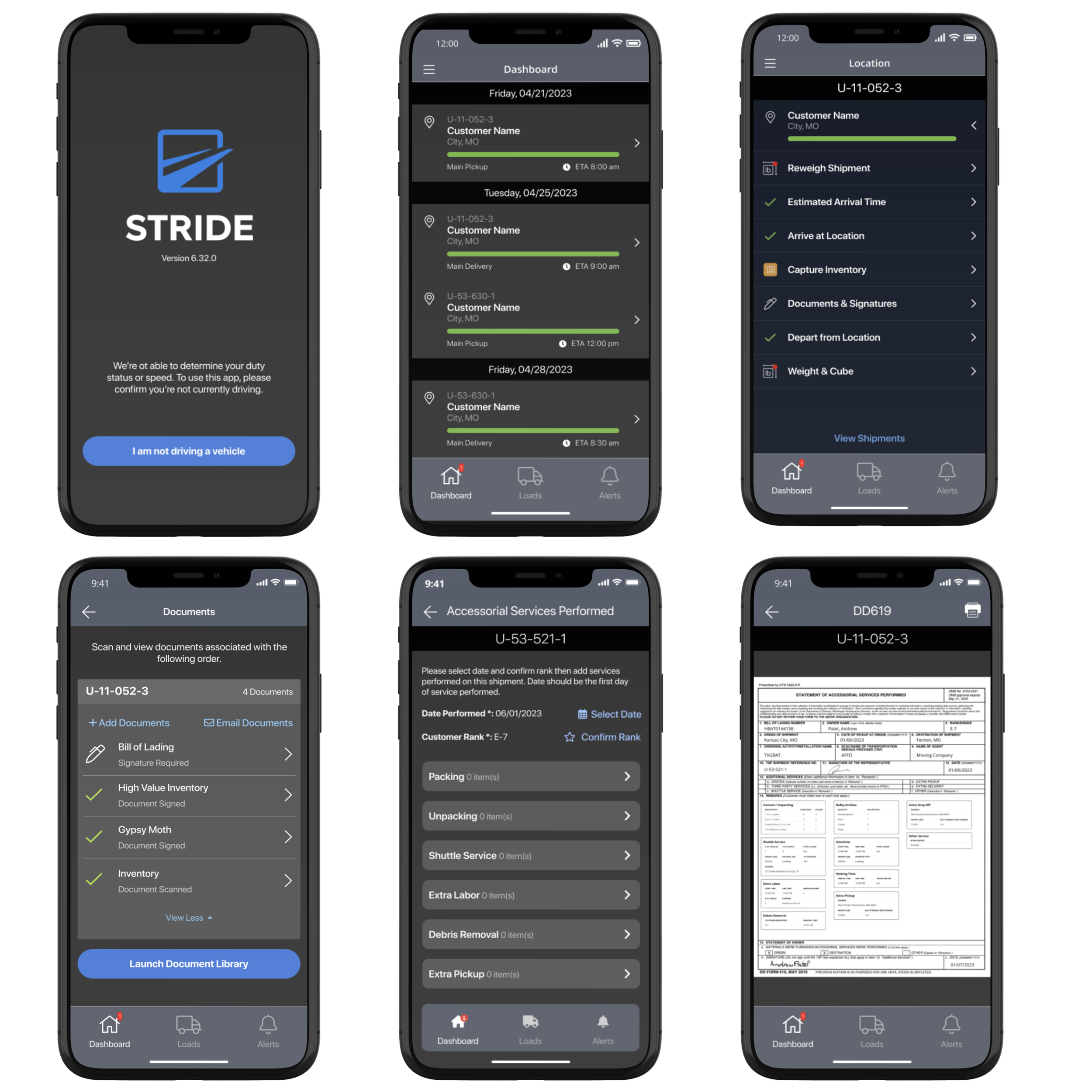
I led the effort to digitize a critical U.S. military document—the DD619—which Van Operators use to inventory household goods during a move. Once completed, this document becomes a foundational artifact used across multiple teams, including agents, finance, third-party military partners, and claims. Accuracy, compliance, and usability were essential, as errors can have downstream impacts across the entire workflow.
Overview
An established pattern for adding documents already existed within the app, so my primary goal was to integrate the DD619 seamlessly into the current user flow. At the same time, I needed to ensure strict adherence to military requirements, as the document must be completed precisely to meet compliance standards.
My Goals
I conducted interviews with key stakeholders at multiple points throughout the design process, including:
Internal Product Team
Unigroup Military Liaison
Internal Development Team
End Users
Findings were synthesized and shared in a comprehensive readout distributed to all parties. This helped reduce information silos and ensured alignment across teams that typically operate independently within IT-driven environments.
Research
Design
I began by mapping the full logic flow in FigJam to validate complex if/then scenarios before moving into high-fidelity design. This artifact allowed me to quickly gut-check assumptions with Product and stakeholders and confirm the logic early.
Once approved, I moved directly into building a Figma prototype, intentionally skipping low-fidelity wireframes. Given the tight timeline and the maturity of the existing app layout, this effort did not require a visual redesign. Instead, the focus was on seamlessly integrating the new document into an established flow—ensuring minimal disruption while maintaining accuracy, compliance, and usability for end users.
The DD619 digitization was delivered under budget due to minimal rework, a result of early alignment across Product, Development, and Military stakeholders. The solution saw strong user adoption immediately upon launch, with little to no resistance from end users.
Because the document was seamlessly integrated into an existing workflow, users required minimal training or hand-holding to complete it accurately and efficiently. Familiar interaction patterns reduced cognitive load and allowed operators to focus on their primary tasks rather than learning a new process.
Most importantly, the project transformed a previously manual, pen-and-paper workflow into a fully digital experience. This shift enabled downstream processes—such as status tracking, payments, and claims—to be streamlined, improving data accuracy, visibility, and operational efficiency across multiple teams.