Lead Managment
One project I particularly enjoyed working on was a Lead Management system called LeadingEdge. The goal of the system was to intake leads (moves) from a centralized, generic funnel and intelligently distribute them based on a defined set of criteria, ensuring leads were routed efficiently and consistently across the organization.
-
LeadingEdge was identified as a critical application after repeated issues with leads entering the system that were ultimately not serviceable, creating a poor experience for agents who had invested $70 per lead.
-
We leveraged multiple data points to design a lead distribution experience that prioritized agent autonomy, transparency, and long-term planning. Agents could proactively define their maximum lead capacity along with an acceptable percentage overage, enabling them to confidently budget and plan for an entire year while retaining the flexibility to make adjustments before each month began. The experience also supported dynamic geographic configuration, allowing agents to easily refine or reassign zip codes in response to shifting market conditions, such as increased demand in high-growth areas. This approach balanced business goals with user control, helping agents feel informed, empowered, and in control of their pipeline.
-
Throughout the research process, we uncovered several critical challenges rooted in what was considered “tribal knowledge”—edge cases and rules that existed informally but were not documented or consistently applied. Examples included Load Day exceptions and Cross-Brand Line sales, both of which significantly impacted how leads should be handled. By surfacing these scenarios through research, I was able to translate implicit knowledge into explicit system logic and design targeted feature enhancements to support these cases, reducing reliance on institutional knowledge and creating a more resilient, scalable experience.
-
After the initial launch of LeadingEdge, we focused on refining and expanding the system to address real-world workflows and maximize lead conversion. Early iterations integrated a Call Center process, allowing cold calls to be assigned directly to agencies quickly, ensuring timely follow-up and reducing lead loss.
In a later release, we incorporated sales team members’ real-time calendars, enabling call center representatives to schedule in-person or virtual surveys seamlessly. This closed gaps for leads that had previously failed due to timing or coordination issues, creating a system where leads could only fail due to customer choice, such as low-intent or exploratory inquiries.
These post-launch enhancements reinforced our design strategy of reducing failure points, improving operational efficiency, and increasing trust in the system, while allowing agents and sales teams to work with confidence and flexibility.
-
Although I transitioned off the LeadingEdge team in 2024, the program’s impact continues to be significant. It has transformed the way leads are managed, creating a reliable, scalable, and user-centered process that reduces failure points and empowers agents to plan and execute their pipelines with confidence.
The system has become a key differentiator and selling point for joining the Agency, demonstrating how thoughtful UX design and strategic workflow enhancements can drive both operational efficiency and user trust. Even after my departure, LeadingEdge remains a central part of the organization’s lead management strategy, validating the long-term value of a design approach that balances business goals with user needs.
EOY 2024:
85% Participation, 348 Members
87,380 Distributed Leads, +39.4% YoY
62,811 Generate Quotes, +16.5% YoY
19,868 Orders, +7.6 YoY
68.1% LE% of total Appointment, +7.5% YoY
-
Team Dynamics:
Team Composition: 1 UX/UI Designer (Lead), 1 Product Owner, 4 Developers
Delivery Model: 2-week sprints with a Kanban approach
Environment: 100% remote
Core Ceremonies:
Standup (1x daily)
Sprint Planning (weekly)
Refinement (weekly)
Product/UI Sync (weekly)
Retrospective (bi-weekly)
Tools Used:
Jira
Figma
FigJam
AirTable
PowerPoint
Project Evolution
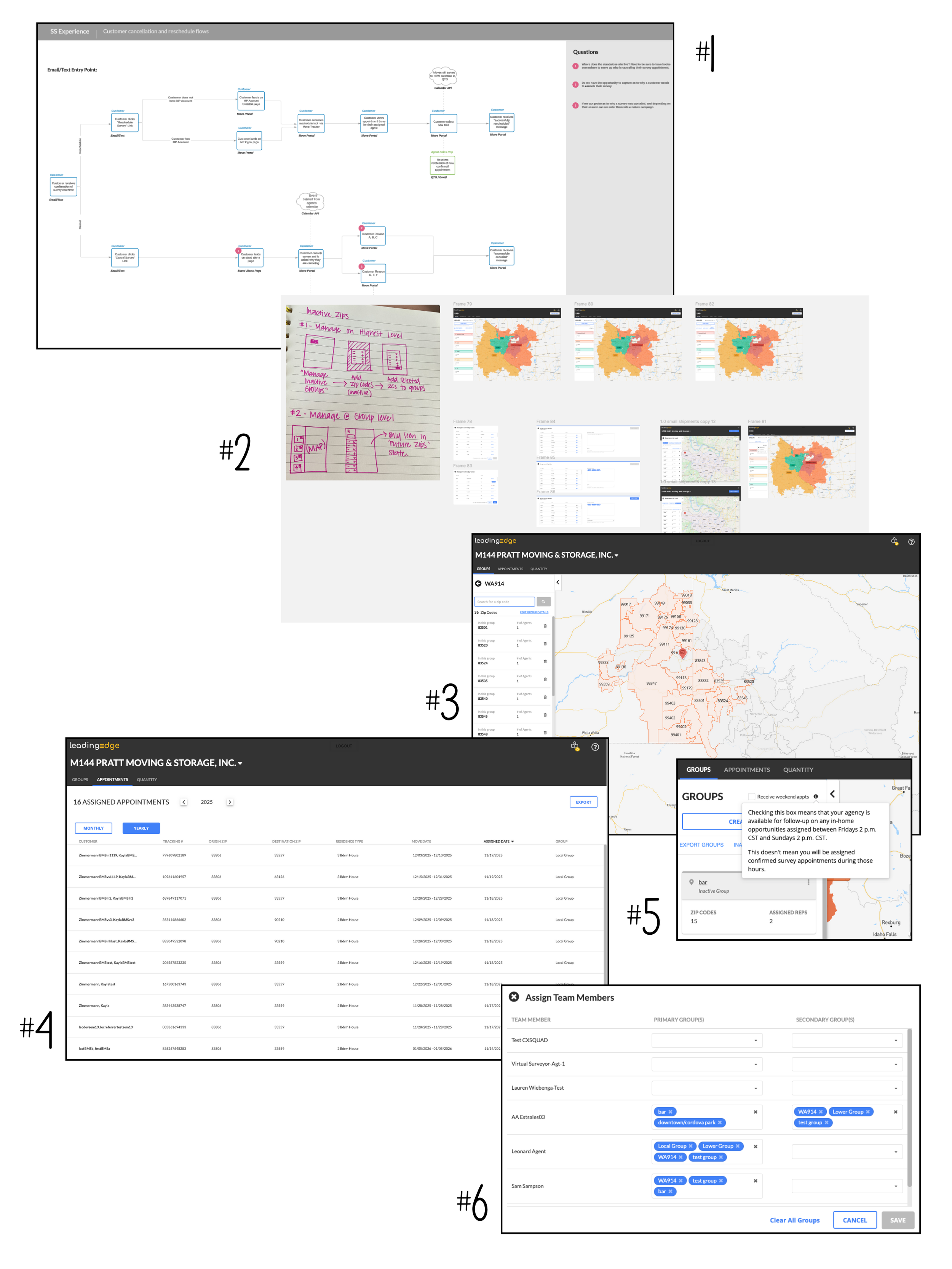
#1: Created a detailed process flow chart to align all three decision-makers—Product, Development, and UX—on the complex lead distribution logic. With numerous rules, exceptions, and edge cases, it was easy to get lost in the workflow. The visual flow chart served as a single source of truth, ensuring clarity, reducing miscommunication, and guiding design and development decisions throughout the project.
#2: Documented the process of translating conceptual ideas into Figma screens and then into interactive prototypes for user testing. This approach allowed me to quickly externalize and validate ideas—essentially “napkin sketching” concepts before committing to high-fidelity designs—saving time and enabling early feedback from colleagues and stakeholders.
#3-#6: Showcased the final application through targeted examples that highlighted the precise business logic and edge-case knowledge built into the system. These demonstrations illustrated how complex rules and workflows were operationalized in the app, ensuring users could utilize the system effectively while supporting successful adoption and trust.