Converge Customer
For the past 10 months, Converge Customer has been my primary focus. It is a net-new product, built from the ground up across both front-end and back-end systems. As the sole UX Designer, I owned the end-to-end user experience strategy while partnering closely with Product and Engineering to ensure design decisions were technically feasible, scalable, and aligned with long-term platform goals.
While my core responsibility was front-end UX, my working knowledge of the back-end architecture enabled me to proactively guide implementation, reduce ambiguity, and accelerate delivery. This systems-level understanding allowed design and development to move in parallel rather than sequentially.
-
Converge Customer is a modern replacement for Quotes To Go, a legacy mainframe application built in the early 2000s. The platform enables Sales Representatives at Unigroup agencies to convert a Lead into an Opportunity and generate a Quote based on that data.
Due to broader system constraints, the application reads from and writes to the legacy platform via APIs. This hybrid approach allowed the organization to modernize the user experience while maintaining stability across downstream systems. Converge Customer operates on the lead-to-order side of the business and is also positioned as a SaaS offering available to agencies within the Unigroup network.
-
While the market includes several competitors, many lack Unigroup’s deep institutional knowledge of the moving and relocation industry. More importantly, they do not have direct access to hundreds of active Sales Representatives. I leveraged this advantage by incorporating continuous user feedback into discovery and prioritization, ensuring that feature decisions were grounded in real operational pain points rather than competitive parity alone.
-
This project required navigating significant organizational complexity, including changes in Product and Development leadership, shifting MVP definitions, compressed timelines, and high stakeholder expectations.
Beyond execution, I acted as a strategic partner—facilitating roadmap discussions, influencing feature prioritization, and clearly articulating trade-offs. I regularly presented work to stakeholders, defended sequencing decisions, and aligned cross-functional teams around a shared vision. These moments required strong communication, confidence, and the ability to balance user needs with business and technical constraints.
I also served as an accessibility advocate, ensuring ADA compliance was treated as a core product capability—not an afterthought. Accessibility standards were embedded into the initial application design and development, and I established an expectation that all future feature enhancements would undergo ADA performance checks as part of the standard development lifecycle. This approach helped bake inclusivity into the product roadmap while reducing long-term risk and rework.
-
Two core features have shipped to date:
Opportunity Creation
Piloted with a beta group from October–December and fully launched on January 5, 2026.Quote
Currently live with a beta group, which began in November. General release scheduled for March 2026.
I worked ahead of development by validating concepts early, synthesizing user feedback, and continuously refining designs to reduce risk and rework. This approach helped maintain momentum while ensuring quality at each release milestone.
-
The product was released iteratively rather than through a single cutover, which has been positively received by users. Feedback indicates the experience feels intuitive, with users referencing the in-app training I designed to support learning at key moments.
To date, the release has resulted in over 500 opportunities created and more than 75 quotes generated. It is worth noting that the quoting functionality is still evolving and has not yet reached full parity with the legacy technology.
-
Team Dynamics:
Team Composition: 1 UX/UI Designer (Lead), 1 Product Owner, 5 Developers
Delivery Model: 2-week sprints with a Kanban approach
Environment: 100% remote
Core Ceremonies:
Standup (2x weekly)
Sprint Planning (weekly)
Refinement (weekly)
Product/UI Sync (weekly)
Retrospective (bi-weekly)
Tools Used:
Jira
Figma
FigJam
AirTable
PowerPoint
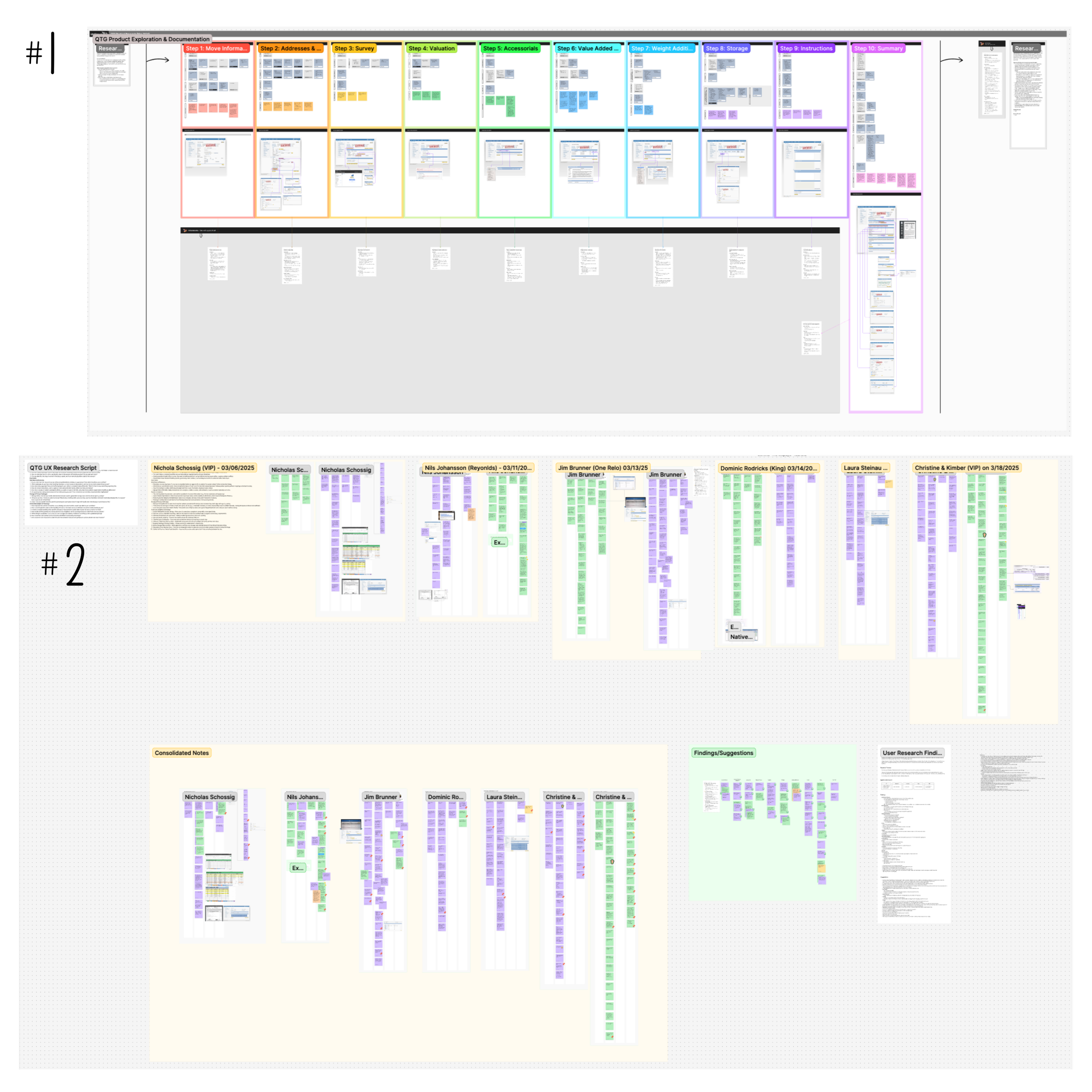
Project Evolution
#01: Process Flow
Led the definition of the end-to-end process flow, mapping screens to key user actions to ensure complete feature coverage and a cohesive user experience.
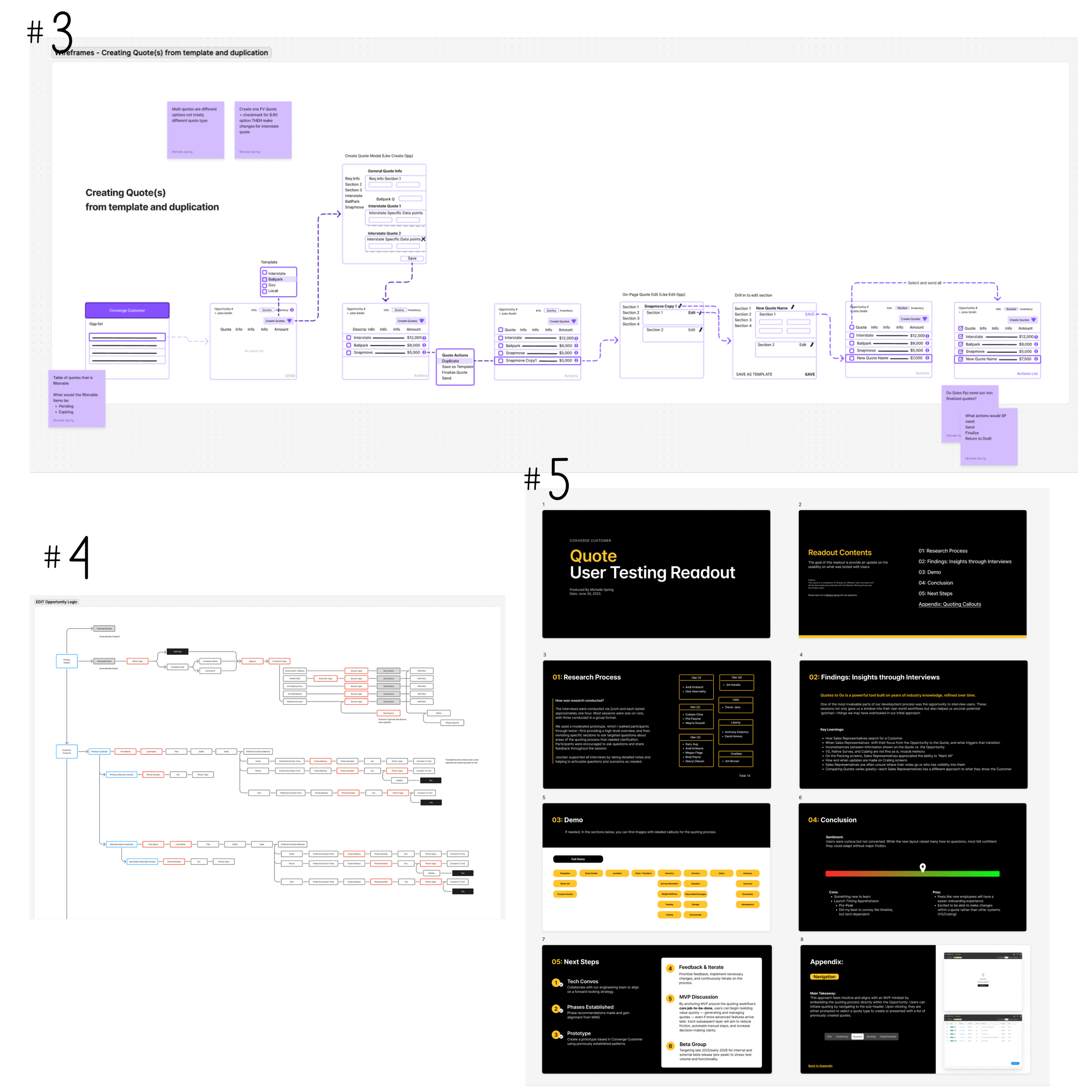
#02: User Research
Led user research by defining interview frameworks, conducting qualitative interviews, and synthesized qualitative insights into themes and translated into actionable insights to be shared across Product, Engineering, and Stakeholder teams.
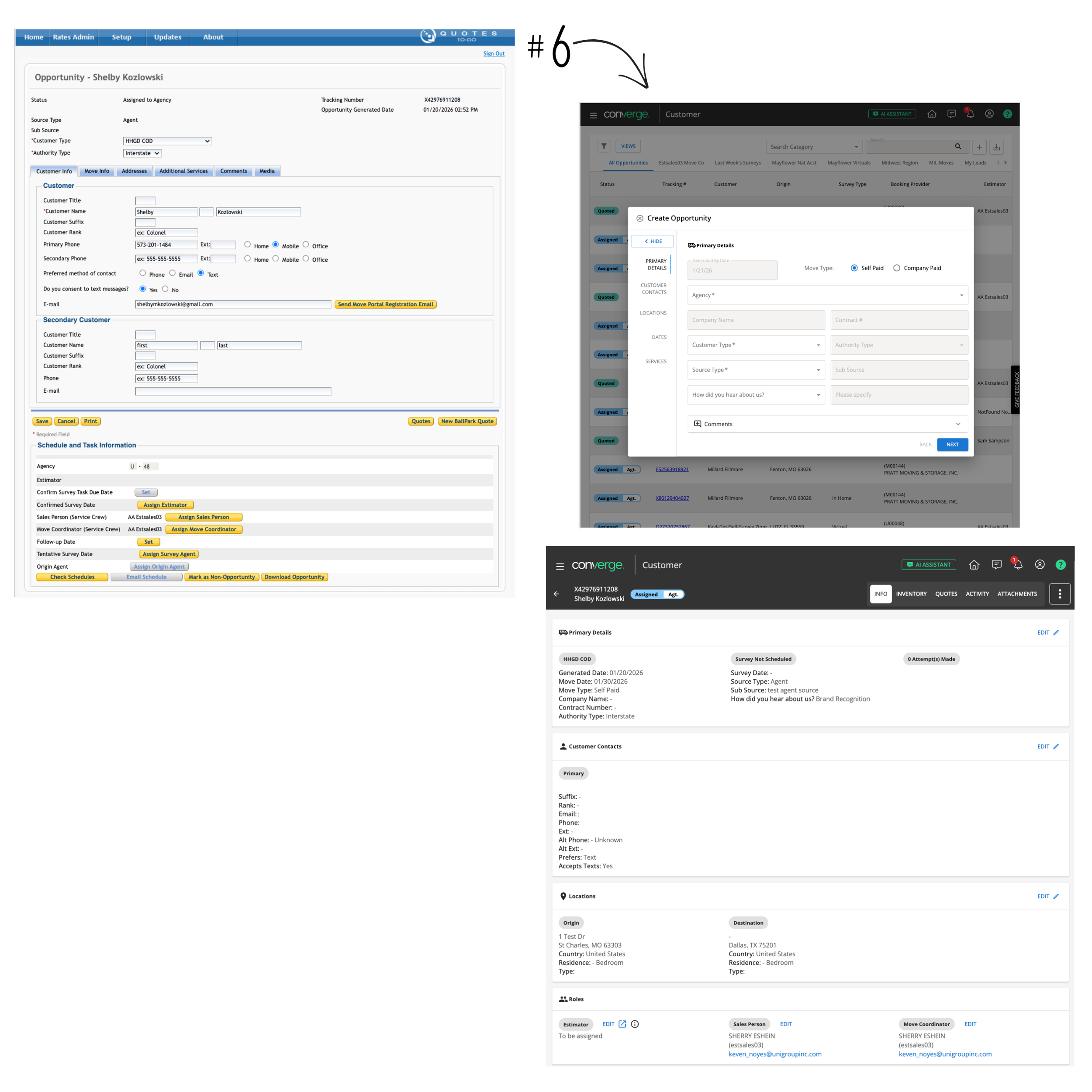
#03: Wireframes
Produced wireframes to de-risk the MVP by confirming functional completeness and flexibility, allowing foundational Opportunity and Quote features to launch quickly while supporting future enhancements as priorities emerged.
#04: Logic Flows
Mapped out detailed form logic to ensure the Development team had a clear understanding of both the initial input flow and the edit flow, helping to reduce ambiguity and support accurate implementation across all form states.
#05: Member Working Group Readout
Owned executive-level communication of user insights and product direction through recurring presentations to a Member Working Group of agency leaders and board members, delivering monthly updates and setting expectations as timelines and priorities shifted.
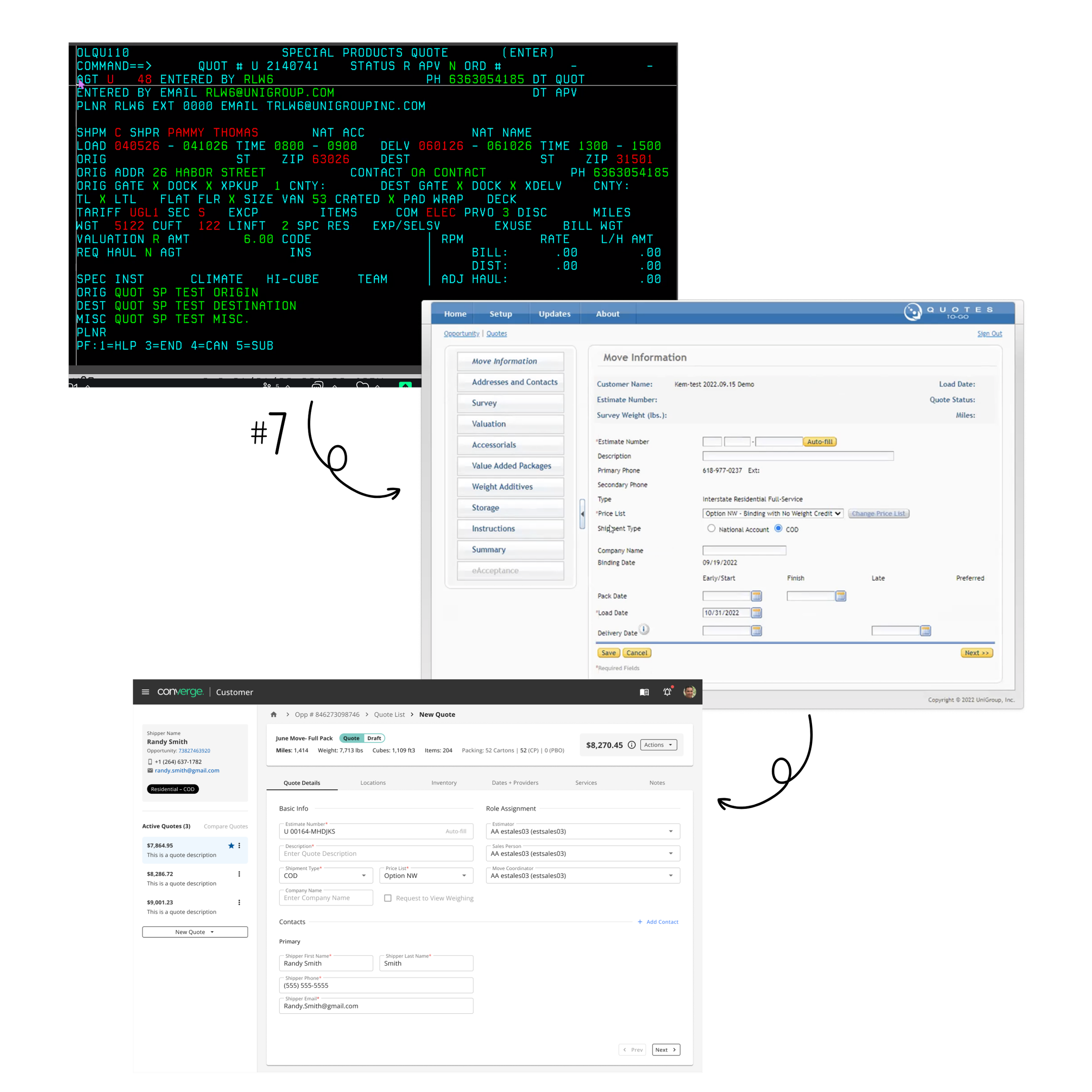
#06: Opportunity Prototype Development
Created and validated a prototype to reimagine a highly complex and outdated workflow, ensuring all existing features were preserved while thoughtfully applying modern UX design principles to simplify interactions, reduce cognitive load, and improve overall user experience.
#07: Quote Prototype Development
Created a comprehensive prototype for both facilitated and independent user testing, while also using it as a communication and alignment tool for the Development team. The experience was broken into vertical slices to showcase key stories and workflows, directly supporting story writing and development planning from the final design vision.
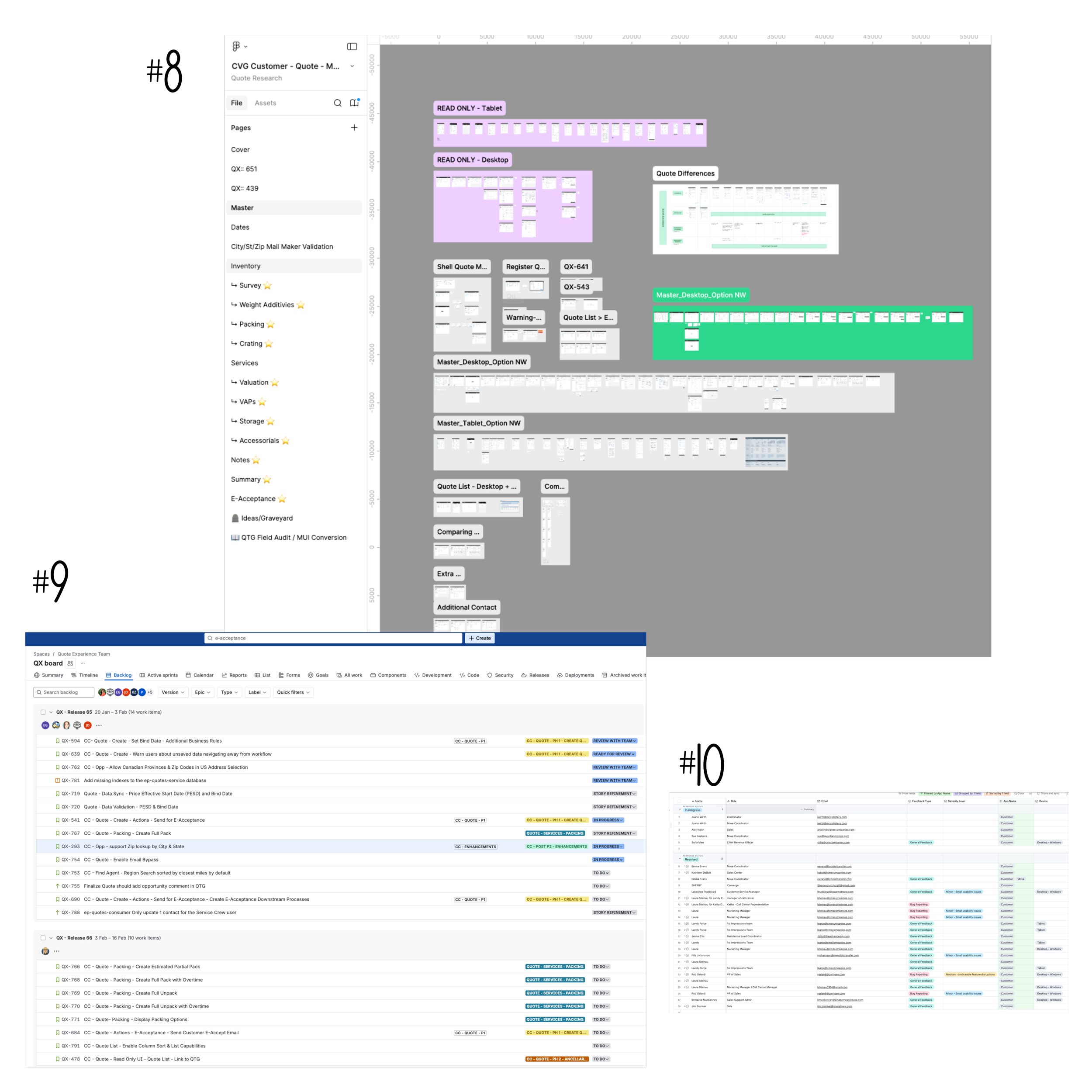
08: Figma File
This is an example of how I organize my Figma files, leveraging pages to group work by feature and clearly communicate structure and intent. This approach ensures the files are easy to navigate and understand for both Product and Development partners, supporting efficient collaboration and handoff.
09: Jira Workflow
This is an example of how stories are written and worked within Jira. I have collaborated with numerous cross-functional teams and helped evolve their workflow to include UX design as a core component of story acceptance criteria, improving alignment and reducing rework.
10: Managing Feedback
This is an example of how Airtable is used to collect, categorize, prioritize, and manage user feedback. I review incoming feedback, identify themes and priority areas, and respond directly to users as needed to close the loop and inform future design decisions.